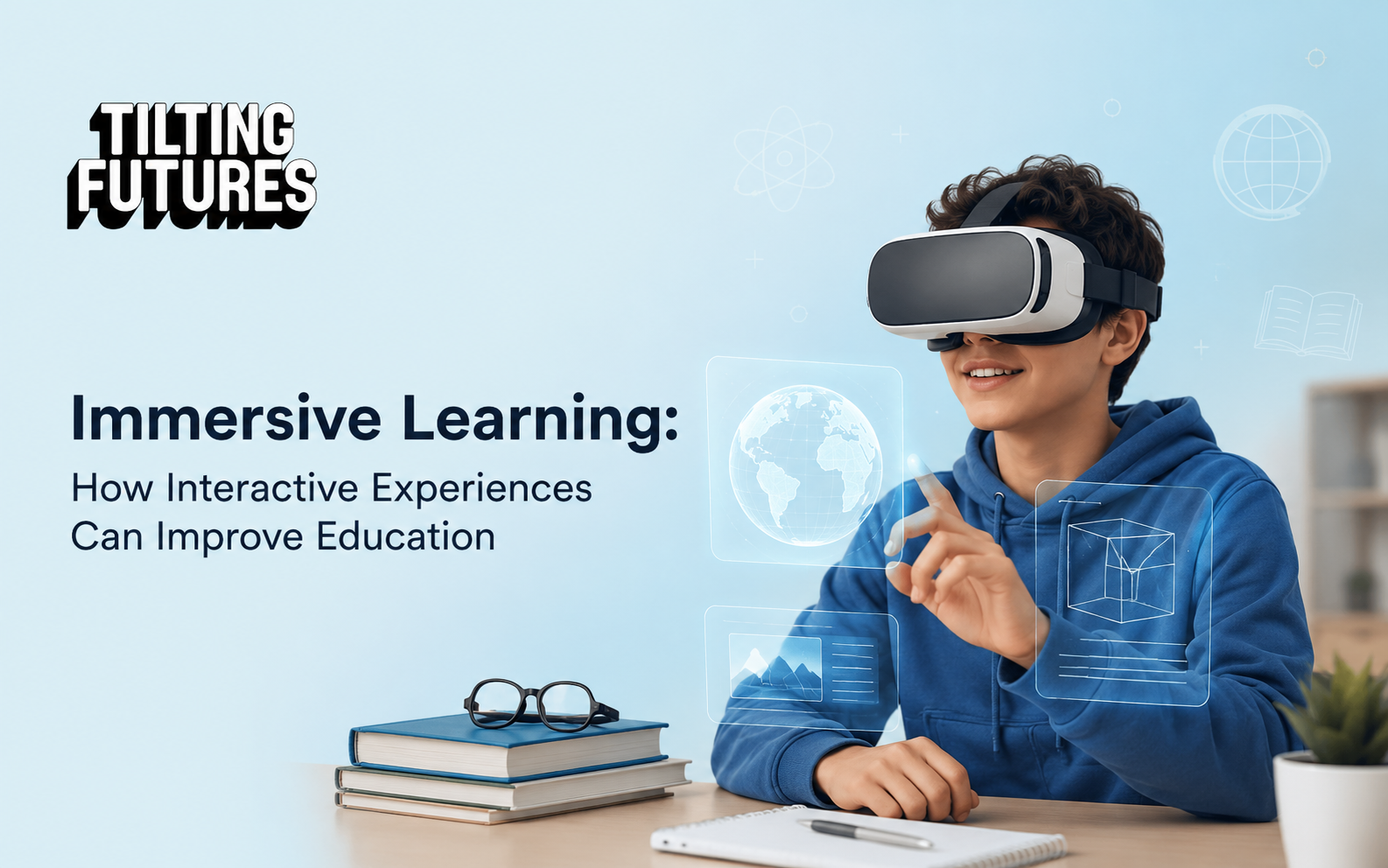
Immersive Learning: How Interactive Experiences Can Improve Education

The textbook might write about under, but nothing experiences a lesson like living it. Immersive learning is a type of simulation (often 3-D), in which learners are placed in real or simulated situations. Students can not only read or listen, but also explore, practice, and react to what they observe.
The latter can bring a more active element to lessons as well as an opportunity for learners to take their learnings to the next level in practice.
Move from Theory to Practice
There are concepts and topics that cannot be easily conveyed with text. Some things like complex science or technical procedures or medical training/workplace skills may be learnt from practice.
Sometimes, these immersive environments can provide a way for learners to experiment with ideas IRL while eliminating the consequences of getting something wrong in real-life scenarios.
For instance, a procedure can be practiced in simulation before going live in the workplace.
See also: Epoxy Coated Rebar: A Stronger Defense Against Corrosion
Involve Learners in the Lesson
Active participation is a significant benefit of immersive learning. Lovers do not just observe a lesson unfolding, they respond to the surroundings and they choose.
This can encourage:
- Problem-solving
- Decision-making
- Practical skill development
- Active participation
- Better understanding of complex topics
It also made lessons more memorable, as learners associated information with actions and outcomes.
Support Different Learning Needs
Every learner does not retain information in a similar way. Many have an easier time with concepts when they can see or practice them.
Another means by which to tackle challenging topics can be provided through interactive environments. Learners may practice certain activities, study alternative results, and rehearse difficulty in their individual time.
Benefits of interactive immersive learning environments can deliver the practice required to enhance learning.
Feedback Can Happen Quickly
Similarly, immediate feedback can enable learners to identify mistakes while the lesson is still fresh. For example, a simulated activity might show how each decision led to the next and give learners another chance.
It allows for a low-stakes environment to practice and lean into the process.
Making Learning More Engaging
The benefits of immersive learning is more than just technology in a classroom. The true function of the operating system is in building meaningful experiences that inform learning and foster transfer of knowledge.
Interactive immersive learning environments offer: active participation, practical practice, quicker feedback, and greater engagement. Immersive experiences can supplement a traditional classroom when they are designed around clear learning goals, and provide learners with another effective method for building knowledge and skills.