Dose Escalation and Tolerability Questions Related to Ozempic Pen Dose Count

Going up a step means a different pen, not a different technique. The labeled schedule for semaglutide injection in type 2 diabetes runs 0.25 mg weekly for four weeks, then 0.5 mg, then 1 mg after at least four weeks, then 2 mg after at least four weeks if more glycemic control is needed. Above 0.5 mg, each step is a separate presentation.
Why four doses per pen and four weeks per step is not a coincidence
The DailyMed labeling sets the initiation amount at 0.25 mg once weekly for four weeks, and each of the multi-dose presentations above the starting range is supplied as four doses. A pen and a step are meant to end at roughly the same time. That alignment is convenient right up until something knocks the two clocks out of phase, and then people start improvising.
The most common desynchronizing events are a delayed refill, a week skipped during illness, and a step held longer than four weeks on purpose. None of them are unusual. All of them leave a person holding a pen whose remaining count no longer matches the plan.
The step where one presentation covers two amounts
The 2 mg/3 mL pen is the awkward one. Per the labeling it is supplied either as four doses of 0.25 mg and two doses of 0.5 mg, or as four doses of 0.5 mg. Someone finishing four starting injections and then moving up on the same cartridge will get fewer injections out of it than they got the month before, and the counter will stop short at the end.
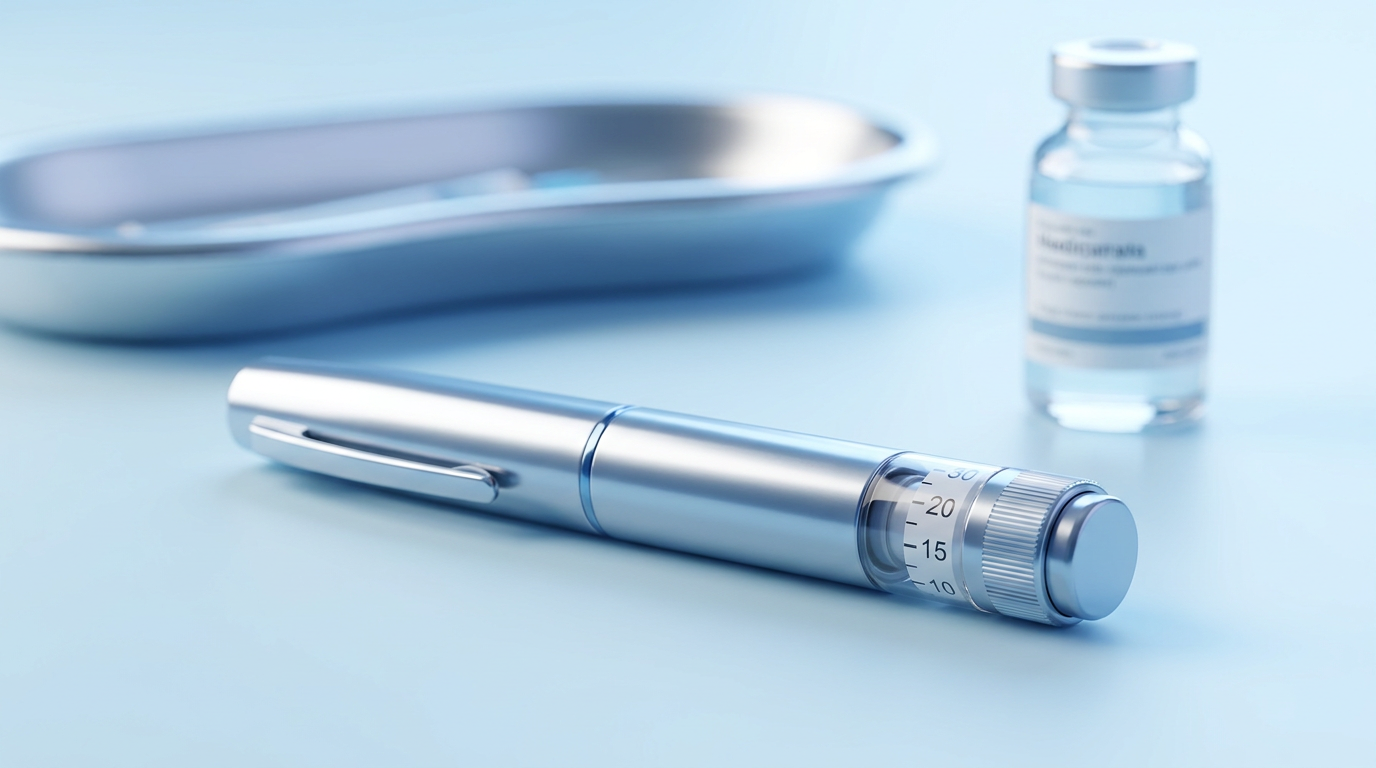
That stop is the device reporting contents, not offering a smaller option. The instructions say that when a pen holds less than a full dose the counter will not reach the number, and that the pen should be replaced rather than partially used. The same document tells users never to draw the contents out with a syringe and never to set a dose by counting clicks, noting that the selector clicks differently forward than backward.
| Labeled step | Pen presentation | Doses supplied | Minimum time before the next step |
|---|---|---|---|
| 0.25 mg weekly, initiation only | 2 mg/3 mL | 4 | 4 weeks, then increase |
| 0.5 mg weekly | 2 mg/3 mL | 2 or 4, depending on how supplied | At least 4 weeks |
| 1 mg weekly | 4 mg/3 mL | 4 | At least 4 weeks |
| 2 mg weekly | 8 mg/3 mL | 4 | Labeled maximum |
Tolerability is the whole reason the ramp exists
The labeling states directly that the escalation exists to reduce gastrointestinal adverse reactions. A 2025 randomized open-label trial published in Diabetes Care compared titration speeds and reported that a more gradual approach produced better treatment adherence and fewer adverse events, which is the clinical case for the ramp rather than an assumption about it.
The warnings section was expanded in October 2025 with a subsection on severe gastrointestinal adverse reactions, and the label states the product is not recommended in patients with severe gastroparesis. Nausea that arrives after an increase and settles is expected behavior. Nausea that does not settle, or that arrives with abdominal pain radiating to the back, is a different conversation.
Holding a step is allowed; inventing one is not
The schedule specifies minimums, not maximums. The wording is “after at least 4 weeks” at each transition, which leaves room for a prescriber to extend a step. Nothing in the labeling creates an amount between the selectable doses on a given pen, and the device physically will not select one. Only the listed doses can be dialed on each presentation.
Real-world data suggests holding a step is common. A UK population-based cohort study of GLP-1 receptor agonist persistence and titration in type 2 diabetes found substantial variation in how quickly people actually move through the sequence, and a 2025 study in Obesity examining why people stop obesity pharmacotherapy with semaglutide or tirzepatide found side effects and cost both feature prominently among the reasons. Slowing down is often what keeps someone on treatment at all.
Because each step up is a different presentation, the cost of a full titration is easier to judge when a provider posts it. LillyDirect and NovoCare Pharmacy publish branded figures, HealthRX lists branded Ozempic among its stated options, and services such as Henry Meds, Ro, and Hims & Hers set their own cash rates that can shift as the amount climbs. Comparing the price at 1 mg and 2 mg, not just the starting step, is the honest way to read those menus.
Not everyone needs the top of the range
The labeled increases above 0.5 mg are conditional on needing additional glycemic control, with a separate path to 1 mg weekly for reducing the risk of sustained eGFR decline, end-stage kidney disease, and cardiovascular death in adults with type 2 diabetes and chronic kidney disease. The maximum is a ceiling, not a target. A person doing well at a middle step has no labeled reason to climb.
Escalation logistics change with the supply route
Whether a step change is smooth depends on who writes the next prescription and how fast. Manufacturer-linked pharmacies such as NovoCare Pharmacy and LillyDirect dispense branded presentations directly. Telehealth programs including Ro, Hims & Hers, LifeMD, and formblends.com handle titration reviews, refills, and cash pricing on their own terms, and the gap between requesting a step change and having the right pen in hand is the practical difference between them. Asking how a mid-cycle change is billed and shipped is a fair question before signing up.
Compounded preparations have no schedule to copy
Compounded semaglutide is not FDA-approved, and its concentration is chosen by the compounding pharmacy rather than fixed by a reviewed label. The milligram steps printed on a branded carton do not transfer to a vial of unknown strength, and there is no dose selector on a vial to make them transfer. FDA has warned about unapproved versions of these drugs marketed for weight loss, including preparations built on salt forms that are not the same active ingredient. Any escalation plan for a compounded product comes from the prescriber who wrote it.
Frequently asked questions
Is there an approved amount between the marked doses on a pen?
No. Each presentation selects only the amounts listed for it, and the labeling explicitly tells users not to set a dose by counting clicks. A person who wants a gentler increase should be asking the prescriber for a longer interval at the current step, which the schedule allows, rather than trying to find a smaller one.
Does staying at one step longer reduce the eventual benefit?
Holding a step delays reaching a higher amount but does not erase progress made at the current one. Trial evidence on titration speed points the other way: gentler escalation was associated with better adherence and fewer adverse events, and treatment that continues generally beats treatment that stops early because of side effects.
What should be reported before a scheduled increase?
Persistent nausea or vomiting, poor fluid intake, unresolved reflux, any hospital or emergency visit since the last step, and whether any weekly dose was missed. New or worsening abdominal pain, vision changes, or signs of dehydration are reasons to raise the question before the increase rather than after it.
Do escalation steps differ for someone using insulin?
The combination matters. The labeling notes that concomitant use with insulin or an insulin secretagogue such as a sulfonylurea raises the risk of hypoglycemia, including severe hypoglycemia, and that reducing the dose of those medications may be necessary. That review belongs with the prescriber at each step, not after a low reading.
Are there screening rules that sit above the whole schedule?
Yes. Semaglutide carries a boxed warning for thyroid C-cell tumors observed in rodents and is contraindicated in people with a personal or family history of medullary thyroid carcinoma or with multiple endocrine neoplasia syndrome type 2. No point on the escalation ladder changes that.