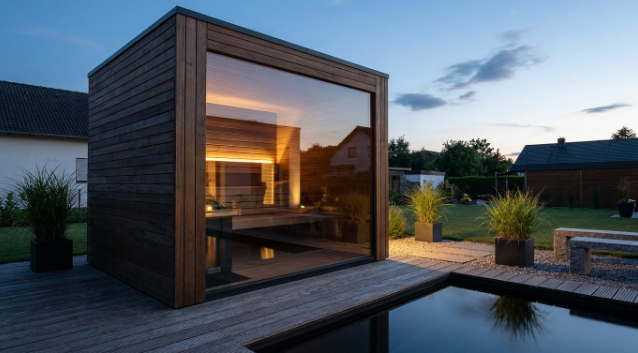
The Best Cube Sauna Setup for Two People Who Use It Daily

For two people using a cube sauna every day, the setup that holds up best is a 5×5 or 5×6 foot interior with a 6 to 8 kW electric heater, two-tier cedar benches, and a double-glazed glass door rather than single-pane. That combination heats in under 25 minutes, gives both users enough room to lie down or stretch out on the upper bench, and avoids the maintenance headaches that come with undersized units run at full output every single day. Smaller 4×4 cubes and larger 6×8 layouts both work, but each trades off something daily users tend to notice within the first month.
Why Does a 4×4 Cube Fall Short for Two Daily Users?
A 4×4 foot cube is the smallest common size in the category and works fine for one person or occasional two-person sessions, but daily use exposes its limits fast. With two adults seated, there’s rarely room for both to use the upper bench at once, so one person ends up on the lower, cooler tier most nights. The heater also cycles harder relative to the room’s small buffer, since two bodies generating heat and moisture in a tight box push humidity and temperature swings that a 4×4’s thermostat has to work overtime to smooth out. Owners who start in a 4×4 and use it daily are the ones most likely to regret sizing down to save a few hundred dollars upfront.
Why Does a 5×5 or 5×6 Cube Hit the Right Balance?
At 5×5 or 5×6 feet, two-tier benches fit comfortably with enough depth for both users to sit or lie down without their feet hanging into the walkway. The extra interior volume compared to a 4×4, roughly 25 to 30 percent more cubic footage, actually helps consistency for daily use: the heater has a bit more buffer to work with, so temperature holds steadier across a 20 to 30 minute session instead of spiking near the heater and lagging in the corners. This size also still fits a 6 to 8 kW heater without oversizing the electrical circuit, keeping installation cost reasonable while giving daily users a room that doesn’t feel like a compromise.
When Does a Larger 6×8 Cube Make Sense Instead?
A 6×8 layout adds real bench length and a wider walkway, which matters if either user wants to stretch out fully or if you plan to occasionally host a third person. The tradeoff is a heater that typically needs to step up to 8 to 10 kW to heat the larger volume in a reasonable time, which usually means a larger dedicated circuit and a higher electrical installation cost. For strictly two daily users with no plans to host others, the 6×8 is often more room than needed, and the larger footprint also eats more of a small backyard, which matters in the compact-lot settings where cube saunas are frequently installed in the first place.
Glass Door: Full Wall, Half Wall, or Standard Window?
Cube saunas are known for their glass, and daily users should weigh how much glass they actually want against heat retention. A standard glass door with a small adjacent window loses less heat than a full panoramic glass wall, which means faster warm-up and slightly lower running cost over a year of daily sessions. A full glass wall looks striking and opens the space up visually, which some owners find makes daily use feel less confined, but it does mean sizing the heater up a notch and accepting a few extra minutes of warm-up time each session. Neither choice is wrong, but daily users running the heater every day for months should factor the added energy cost of more glass into the decision rather than choosing on looks alone.
What Bench and Ventilation Details Matter Most for Daily Use?
Two-tier benches with at least 18 inches of depth on the lower tier and 24 inches on the upper tier give both users room to sit comfortably without touching. Rounded bench edges and a smooth backrest matter more for daily users than occasional ones, simply because repeated contact adds up. On ventilation, a properly placed low vent near the heater and a high vent on the opposite wall keeps air circulating so the room doesn’t develop stale, overly humid air after months of nightly use, which also protects the cedar paneling from premature graying. Buyers comparing specific cube models for daily-use durability can check bench depth, vent placement, and heater wattage side by side at sweatdecks.com/collections/cube-saunas before settling on a size.
What Does Daily Use Mean for Long-Term Costs?
Running a 6 to 8 kW heater for a 25 to 30 minute session every day adds up to noticeably more electricity use than a weekend-only routine, though at typical US residential rates it’s still commonly under $1 to $1.50 per session. The bigger cost difference shows up in maintenance: stones cracked by daily heat cycling should be checked yearly instead of every other year, and heating elements under constant daily use may need replacing closer to the 5-year mark than the 10-year mark quoted for occasional use. Budgeting for that shorter maintenance interval upfront avoids surprises down the line.
Does Placement in the Yard Affect Daily Use?
Where a cube sits changes how often two people actually use it every day, not just how it performs on paper. A cube placed close to a back door, on a level, cleared path, gets used far more consistently through a full winter than one tucked at the far end of a yard behind uneven ground, simply because the friction of getting there in cold weather adds up over months. A covered or partially covered approach path also matters more for daily glass-door units than for occasional-use cabins, since condensation and frost on a cold glass door can make the seal stick if it’s exposed to weather every night. Positioning the cube so the glass wall or door doesn’t face straight into prevailing wind also cuts down on heat loss during the coldest sessions of the year, which for two people running the heater daily through a full season adds up to a meaningful difference in comfort and electricity use.
Frequently Asked Questions
What size cube sauna is best for two people using it daily?
A 5×5 or 5×6 foot interior works best, large enough for two-tier benches without cramped room, small enough to heat in under 25 minutes.
Should a daily-use cube sauna have a glass door or a solid wood door?
A glass door is fine as long as it’s double-glazed and sauna-rated, since single-pane glass loses heat faster and raises running cost.
How often should a daily-use cube sauna heater be serviced?
Check and replace stones roughly once a year under daily use, and have the heating element inspected annually since daily cycling shortens its lifespan.
Is a 6 kW heater enough for two people using a cube sauna every day?
For a 5×5 cube with a standard glass door, 6 kW is generally sufficient, though cold climates or a full glass wall often call for 7 or 8 kW.
References
- “Clinical Effects of Regular Dry Sauna Bathing: A Systematic Review.” Evidence-Based Complementary and Alternative Medicine, 2018. https://pubmed.ncbi.nlm.nih.gov/29849692/
- “Effects of heat and cold on health, with special reference to Finnish sauna bathing.” American Journal of Physiology – Regulatory, Integrative and Comparative Physiology, 2018. https://pubmed.ncbi.nlm.nih.gov/29351426/
- “Does the Combination of Finnish Sauna Bathing and Other Lifestyle Factors Confer Additional Health Benefits? A Review of the Evidence.” Mayo Clinic Proceedings, 2023. https://pubmed.ncbi.nlm.nih.gov/37270272/
- Harvard Health Publishing. https://www.health.harvard.edu/staying-healthy/saunas-and-your-health
By Renata Voss