Autonomous Vision Systems Explained

Autonomous vision systems follow a disciplined sensing-to-perception pipeline. Sensing data is preprocessed, features are extracted, and perception modules produce actionable understanding. Sensor fusion combines modalities with quantified gains and controlled noise. Real-time object recognition and scene understanding drive decisions, while motion estimation and tracking support predictive continuity. Governance covers bias reduction, auditing, and accountability. The balance of safety, privacy, and transparency shapes practical deployments, leaving open questions about reliability under edge cases and the impact on future autonomy.
How Autonomous Vision Works: From Sensing to Perception
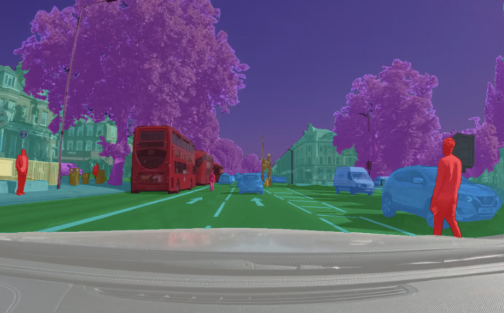
Autonomous vision systems transform raw sensor data into actionable understanding through a disciplined sequence: sensing, preprocessing, feature extraction, and perception. The process emphasizes measurable perception benchmarks, enabling objective evaluation of accuracy and latency.
Sensor fusion tradeoffs arise from combining modalities, guiding robustness versus complexity. The approach remains pragmatic: quantify gains, manage noise, and preserve real-time constraints while maintaining system configurability for diverse environments.
See also: Autonomous Vehicles Explained
Object Recognition and Scene Understanding in Real Time
Real time encryption ensures secure data channels, while 데이터 프라이버시 measures safeguard sensitive visual content during processing and storage, preserving operational transparency and user autonomy.
Motion Estimation, Tracking, and Decision Making
The approach emphasizes predictive continuity, minimizing abrupt changes while acknowledging tracking drift under dynamic scenes.
Reliability, Safety, and Ethics in Practice
Data bias and accountability frameworks are central concerns, guiding verification, auditing, and remedial action. Practitioners implement transparent testing regimes, continuous monitoring, and traceable decisioning to uphold public trust and operational integrity.
Frequently Asked Questions
How Do Autonomous Vision Systems Handle Glare and Reflections?
Glare mitigation and reflection handling are addressed via sensor fusion, adaptive exposure, polarization, and dynamic ROI selection; algorithms suppress saturated pixels, compensate intensity, and exploit multi-view data, yielding robust perception despite challenging lighting and freedom-seeking optimization.
Can These Systems Learn From User Corrections in Real Time?
Glimmering epistles hint at learning; the system can incorporate user corrections in real time, though guardrails constrain adaptation. Adaptive feedback enables instantaneous updates, while Real time corrections refine models, balancing autonomy with human-guided stability for legitimate freedom.
What Are the Privacy Implications of Camera Deployment?
Camera deployment raises privacy implications due to pervasive data capture, retention, and potential misuse; safeguards like minimization, opt-outs, robust governance, and transparent logging are essential for aligning deployments with individual autonomy and freedom.
How Do Systems Fail Gracefully in Degraded Environments?
In degraded environments, systems fail gracefully by maintaining essential functions while reducing performance; defined failure thresholds trigger safe modes, adaptive resource allocation, and clear alerts, ensuring continued operation within acceptable limits rather than abrupt collapse.
Do These Systems Require Labeled Data for Every New Scenario?
Yes, not every new scenario requires fresh labeling. Data labeling may be minimized via domain adaptation, leveraging prior annotations while adapting models to new contexts; these systems generalize through transfer learning, synthetic data, and uncertainty-aware enhancements for flexible operation.
Conclusion
In this world of flawless sensors and immaculate perception, autonomy simply hums along—until it doesn’t. Sensing perfection, latency-free feature extraction, and impeccably fused data promise certainty, yet real systems still stumble, learn, and adapt, often invisibly. So, yes, autonomous vision delivers efficiency and precision, with governance and ethics trailing like cautious shadows. The real takeaway: reliability arises not from invincibility, but from disciplined oversight, transparent auditing, and the humility to correct when the optics misread the world.