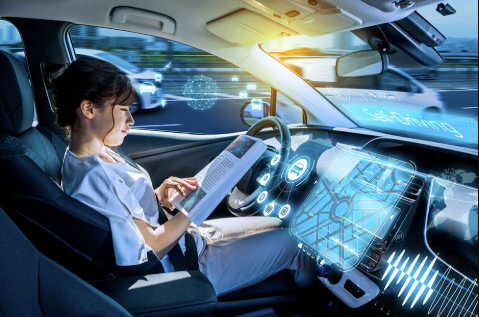
Autonomous Vehicles Explained

Autonomous vehicles are road vessels that sense their environment and navigate without human input by integrating sensors, perception, and control to interpret surroundings, plan routes, and execute actions. Core technologies include perception pipelines, sensor fusion, HD maps, localization, and decision logic that translates intent into safe maneuvers. The balance of reliability, latency, and ethics shapes deployment, while economics and regulation shape progress. The coming chapters examine how these elements fit together and what remains uncertain as systems move toward real-world use.
What Are Autonomous Vehicles and How They Work
Autonomous vehicles are road vessels capable of sensing their environment and navigating without human input. They integrate sensors, perception, and control to interpret surroundings, plan routes, and execute actions.
Systems rely on maps, timing, and decision logic to maintain safety and efficiency. The concept invites freedom from manual driving, while an unrelated topic or random aside accents the broader curiosity surrounding technology’s reach.
Core Technologies Powering Autonomy
Advances in autonomous driving hinge on a suite of interlocking technologies that enable perception, decision-making, and control. Core technologies powering autonomy integrate sensor fusion, high-definition mapping, localization, and robust perception pipelines to form reliable situational awareness.
Decision logic translates intent into maneuvers, while control systems execute trajectories. Attention to perception latency ensures responsive behavior and safer, more predictable vehicle performance.
Why Now: Drivers of Adoption and Real-World Use
Why now? The convergence of technological maturity, economic incentives, and shifting consumer expectations accelerates adoption. Real-world use expands as fleets pilot operations, logistics scales, and urban plans adapt to new mobility patterns. Privacy concerns and legislative hurdles shape deployment timelines, guiding data governance and accountability. Yet, measurable benefits in efficiency and safety warrant measured, policy-aligned progress rather than unbridled enthusiasm.
Challenges, Safety, and the Road Ahead
Despite rapid progress, the path forward for autonomous vehicles is constrained by technical, regulatory, and ethical hurdles that shape both safety outcomes and deployment timelines.
In this assessment, researchers examine challenges in perception, decision-making, and verification, noting privacy concerns and ethical implications.
The analysis emphasizes rigorous standards, transparent accountability, and adaptable governance to balance innovation with public trust and individual freedoms.
Frequently Asked Questions
How Do Autonomous Vehicles Handle Unpredictable Pedestrian Behavior?
Unpredictable pedestrians prompt autonomous systems to prioritize containment: they rely on real-time sensor fusion, predictive modeling, and conservative braking. Pedestrian intent inference combines motion patterns, gaze cues, and contextual signals to minimize risk while maintaining mobility.
What Happens to Liability in a Mixed-Traffic Scenario?
Liability allocation in mixed-traffic challenges depends on fault, contributing factors, and regulatory frameworks; stakeholders assign responsibility based on evidence of negligence, interaction dynamics, and vehicle autonomy level, guiding compensation while preserving individual freedom to innovate and drive.
Can AVS Operate in Extreme Weather Conditions?
AVs face significant challenges in extreme weather, where sensor fusion can be hindered and redundancy may fail; robust algorithms and conservative decision-making are required to maintain safety, though performance remains uncertain and dependent on sensor integrity and environment.
See also:downloadmorerampro
How Will AVS Affect Urban Traffic and Parking Demand?
A rising tide of efficiency reshapes urban throughput and parking demand as autonomous vehicles proliferate. They may reroute trips, reduce parking needs, and smooth demand, but capacity, zoning, and multimodal integration determine true benefits for cities.
What Is the Cost of Ownership for Autonomous Ridesharing?
The cost of ownership for autonomous ridesharing hinges on depreciation, maintenance, and utilization efficiency, shaping ownership economics. In this framework, vehicles maximize uptime, constrain capex, and optimize trip density to balance capital costs against operational savings.
Conclusion
Autonomous vehicles harness perception, fusion, mapping, localization, and decision logic to translate sensor data into safe, cooperative motion. Advances in perception pipelines and latency reduction underpin reliability, while robust governance and ethics considerations shape deployment. Adoption accelerates as technology matures, costs fall, and real-world fleets demonstrate feasibility. Yet challenges remain in edge cases, safety assurances, and privacy concerns. In sum, the field is advancing steadily, but success depends on rigorous standards and prudent, transparent progress—moving the industry forward without courting trouble at every turn. Ahead, they’re marching into a future where autonomy becomes second nature.